
Sisters of St. Joseph from all over the world gathered today at the International Centre for the 10-day Cultural Diversity project. They come from places like Argentina, Bolivia, Brazil, Canada, Congo, France, India, Ivory Coast, Lebanon, Madagascar, Mexico, Switzerland, and USA and many work in other countries--21 in all.
Twenty-four new finally-professed sisters, three translators and four project directors had all arrived by Saturday night--with the Brazilian sisters finally reaching the Centre at 1 am due to two flight delays. For many of the sisters, this was their first time out of their country or on an airplane, however, they were all jubilant to be in Le Puy, the place where their congregations were originally founded in 1650.
The sisters lost no time introducing themselves to each other, which turned out to be very easy because even though they spoke different languages and were from countries all over the world, they all had a common bond as Sisters of St. Joseph who came to invest in and develop skills in cultural diversity.
Getting Started
It was cold Sunday morning in Le Puy, so the heavier coats that some sisters brought with them came in handy. After breakfast, the sisters began with an icebreaker--no pun intended. They formed two circles and walked to music in opposite directions. When the music stopped, they turned toward each other, and introduced themselves to a new friend.


Karin Nuernberg (USA) and Sushma Lakra (India)

Pretty Kujur (India)
and Ortencia Pascual (Argentina)

Manuella (Switzerland) and Raymonda Saade (Lebanon)

Ashaprava Kujur (India) and Marie-Christine (France)

Aparecida Andrade (Brazil) and Emma Dieme (Ivory Coast)

Ericka Salvatierra (Bolivia) and Remya Thomas (India)

Project directors Griselda Morales (Mexico) and Pepis Pilar (Mexico) led the group in the morning's icebreaker.
At 9:30 the sisters began a 30-minute walk through the city to attend Mass at the Parish of the Carmelites, the home parish of the International Centre.

Remya Thomas, Anitha Yandava and Bindu O-L, all of India
Conferences

The sisters have a grueling schedule with conferences beginning at 9 a.m. and going until the evening meal at 7 p.m.--sometimes until 8:30 p.m. Because there are 4 different languages spoken, the Centre provided translators. Here the sisters try out the head phones through which the translations are transmitted.
 |
| The English-speakers' table |

Dial 1 for English
Dial 2 for Spanish
Dial 3 for French
Dial 4 for Portuguese

Preeti Kujur (India)

Colleen Gibson (USA)

Sunday Night Repas
The conference began officially with a reception of snacks and a champagne-like drink along with much joy and fellowship.

 |
Ericka Salvatierra (Bolivia), Mary Clare Seitz (Canada), Sushma Lakra (India), Dulce Fita (Mexico), Marie-Christine (France)
|
 |
Anitha Yandava (India), Sandra Vilela (Brazil), Ashaprava Kujur (India)
|
 |
Nicole Raveloarimanga (Madagascar), Karin Nuernberg (USA), Astrid Kambamba (Congo)
|
 |
Colleen Gibson (USA), Remya Thomas (India), Smith Bishovi (India)
|
 |
Remya Thomas (India), Anitha Yandava (India), Preeti Kujur (India), Ortencia Pascual (Argentina), Smitha Bishovi (India) Ashaprava Kujur (India)
|
 |
Translators Elaine Hollis (Portuguese), Simone Sauces (French), and Mary McGlone (Spanish)
|
Dinner included chicken in sauce, Italian green beans, a cheese plate of brie and a dessert of pear halves in syrup.


 |
Manuella (Switzerland), Emma Dieme (Ivory Coast), Astrid Kambamba (Congo)
|
Project Leaders
 |
| Maria Del (Pepis) Pilar |
 |
| Griselda Morales |
Griselda Martinez Morales is with the Mexico Province of the Sisters of St. Joseph of Lyon. She currently serves as a theology professor at Escuela de Teología de la Conferencia de Religiosos en México (Theology School of the Religious Conference in Mexico). She is also the director of the Cultural Diversity Program, now in its third year.
From 2009-2014, she was United Nations NGO Representative of the Congregations of St. Joseph, which represents nearly 14,000 sisters around the world. She served on the UN's Economic and Social Council in New York and lived with the Brentwood sisters.
Pepis Pilar is with the Mexico Province of the Sisters of St. Joseph of Lyon. She was a high school principal and professor of theology and Spanish language and literature. For 10 years she served as mistress of novices and postulants and 12 years as a member on the General Council in Lyon. For 5 years she lived in Rome where she served the Union of Superior Generals as a translator for the Spanish people. Over the past 6 years she has lived in Egypt as a companion and a presence for the 14 Lyon sisters there. This year she will do the same work in Lebanon.

Avila University Professors Carol Coburn and Ken Parsons have been working with the sisters to design, refine and evaluate the Cultural Diversity & Conflict Management curriculum, which is part of a three-year grant funded by the Conrad N. Hilton Foundation.
Carol is a professor religious studies and women's & gender studies while Ken is a professor of Philosophy and the director of the Center for Global Studies & Social Justice.
Avila University in Kansas City, MO, is sponsored by the Sisters of St. Joseph of Carondelet.
The Cultural Diversity project is made possible by a grant from the Conrad N. Hilton Foundation of Agoura Hills, CA. The foundation is committed to funding religious organizations that work to improve the lives of disadvantaged and vulnerable people throughout the world. It has taken a special interest in supporting the development of Catholic sisters.
"Catholic sisters contribute to human development through their spiritual witness and service to those in need," states the foundation's website. "More than 700,000 sisters around the world educate our children, care for the vulnerable, stand with the oppressed, promote peace, and advocate for justice. Like our founder, Conrad N. Hilton, we recognize sisters as resourceful, efficient, and powerful agents of social change."
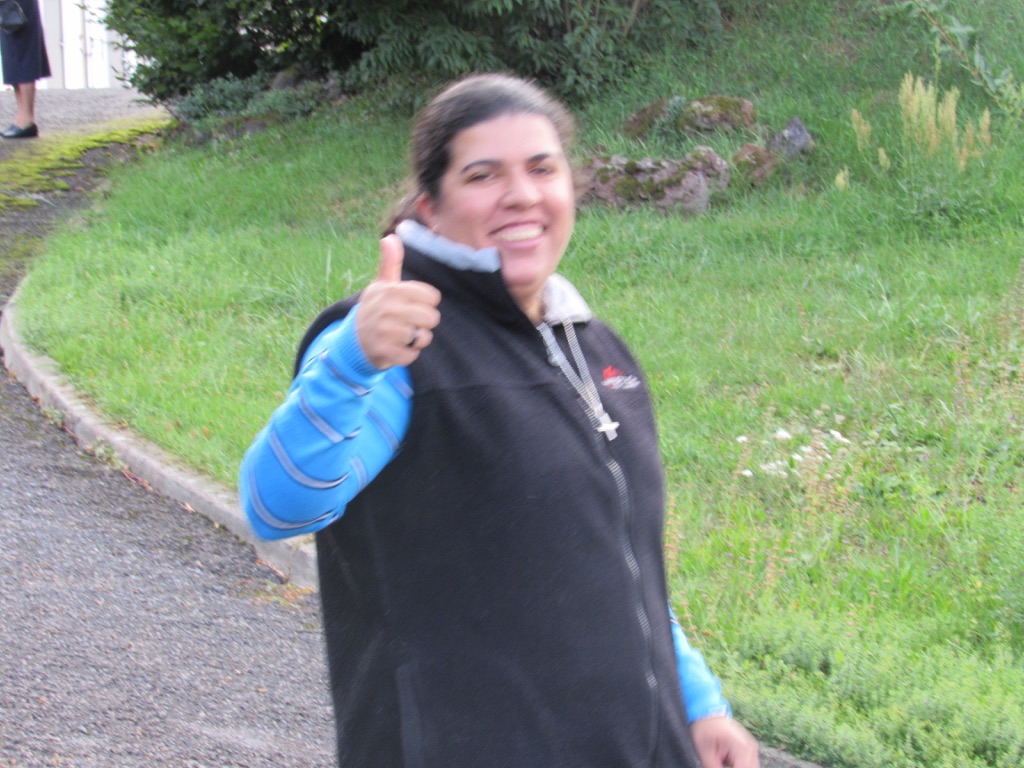
Raymonda Saade of Lebanon thinks the Cultural Diversity project is A-OK.


4 comments: